The best refrigerators for large families in 2026 start with the layout, not the brand: a standard-depth French-door refrigerator is the best overall choice when it fits your kitchen. Choose a side-by-side for tight door clearance, a top-freezer for straightforward storage, or a counter-depth French-door model when floor space matters more than interior depth.
- Best refrigerators for large families in 2026: choose standard-depth French-door for flexible fresh-food storage.
- Choose a side-by-side when full-width doors would obstruct a walkway.
- Check kitchen measurements and your current refrigerator's cooling before deciding to replace it.
- Affordable Appliance Care repairs refrigerators in Los Angeles and Ventura County; it does not sell the models ranked here.
Why this matters
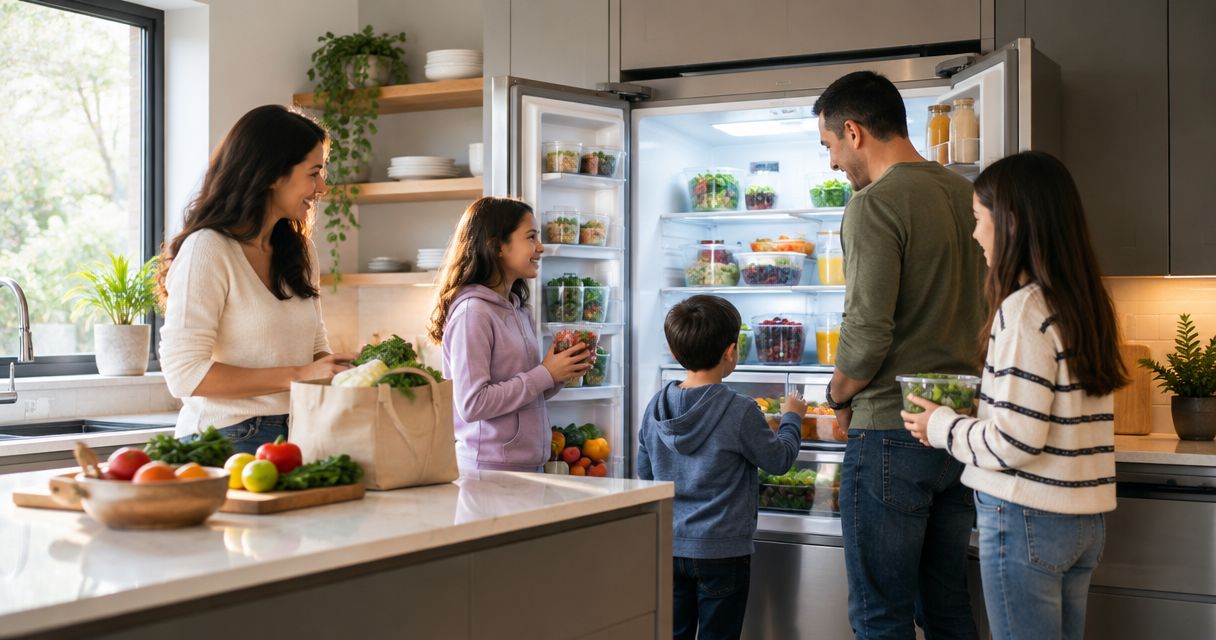
A large family's refrigerator gets tested at the least convenient moment: after groceries come home, when leftovers need space and someone needs a drink without unpacking a shelf. A layout that looks spacious in a showroom can be awkward once you account for door swing, drawers and the food your household actually stores.
If your current refrigerator has stopped cooling, buying another one is not automatically the first move. Affordable Appliance Care provides refrigerator repair for residential and commercial customers in Los Angeles and Ventura County. Start with safe cooling checks, then decide whether the problem is repairable or the layout itself no longer works for your household.
The 2026 picks below rank refrigerator configurations, not individual models. A model's dimensions and features determine whether a configuration works in your kitchen; no layout guarantees a particular capacity or repair outcome.
What makes the best refrigerator for a large family
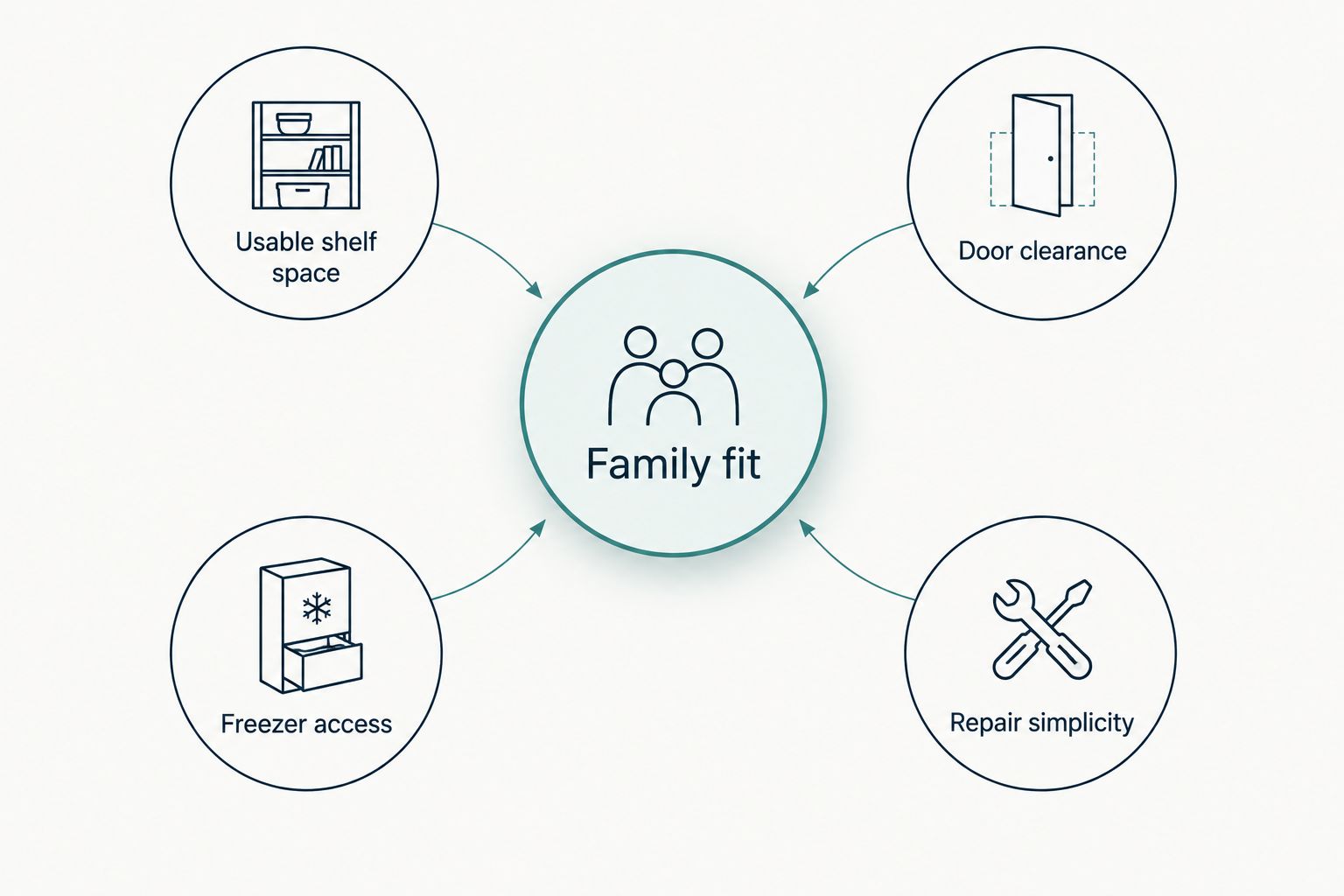
Family fit comes before a feature list. Use these criteria in order, and check the specifications of any model you consider against your measurements and shopping habits.
- Usable shelf space: Picture your usual grocery load, including wide containers, tall cartons and leftovers. Adjustable shelves help only if the remaining layout still holds what you buy.
- Door clearance: Measure the space with doors open, not just the empty opening where the refrigerator will stand. Check nearby counters, walls, walkways and the path drawers need to pull out.
- Freezer access: Decide whether your family needs a clear view of frozen food, room for wide packages or easy access to items used daily. A large freezer is less useful when frequently used food gets buried.
- Repair simplicity: Compare the features you will use with the additional systems you would need to maintain. An ice maker or dispenser can be convenient, but neither is necessary for cold storage.
- Cooling condition: If you are replacing a malfunctioning unit, confirm the fault before treating every warm shelf as a reason to buy. A working freezer and warm fresh-food compartment still call for diagnosis.
Check the room before comparing refrigerators. Record the available width, height and depth, then check the installation clearances required by each model's manufacturer. Measure the delivery route too: a unit that fits its final position still has to reach it. Those measurements will do more to narrow your 2026 shortlist than a list of features you might never use.
Best refrigerators for large families at a glance
| Refrigerator layout | Best for | Standout feature | Key limitation |
|---|---|---|---|
| Standard-depth French-door | Families prioritizing fresh-food organization | Wide fresh-food compartment above a pull-out freezer | Needs room for its depth and open drawers |
| Side-by-side | Kitchens with limited door-swing space | Narrower door swing on each side | Divided compartments restrict some wide items |
| Top-freezer | Families wanting uncomplicated storage | Separate freezer above the fresh-food compartment | Lower fresh-food shelves require more bending |
| Counter-depth French-door | Kitchens where protrusion affects movement | Shallower cabinet profile than a comparable standard-depth layout | Less interior depth for bulky groceries |
The table compares layouts, not specific models. Do not choose from the layout name alone: compare interior dimensions, shelf arrangement and door movement on the exact refrigerator before you order. A capacity figure cannot tell you whether your widest container will fit on a useful shelf.
1. Standard-depth French-door: best refrigerator for fresh-food storage
A standard-depth French-door refrigerator puts fresh-food shelves at the top and a freezer drawer below. Its broad fresh-food compartment suits households that routinely store wide containers, produce and prepared meals. Two fresh-food doors let you open the side you need, although you must still check whether drawers and bins can extend fully in your kitchen.
This is the best overall layout for a large family in 2026 when the kitchen accommodates its depth. It is not an automatic win for a narrow walkway or for a household that needs to see every frozen item without sorting through a drawer.
Standard-depth French-door pros:
- Broad fresh-food shelving can accommodate wide containers, subject to the model's shelf dimensions.
- Fresh food sits above the freezer, putting commonly used shelves higher.
- Split fresh-food doors give you more ways to access the compartment in a busy kitchen.
Standard-depth French-door cons:
- Its cabinet can project farther into the room than a comparable counter-depth design.
- A pull-out freezer drawer can make it harder to spot items underneath other packages.
- You need enough space to open doors and extend drawers, not merely enough space for the closed cabinet.
Best for: A household whose fresh-food storage needs come first and whose kitchen can accommodate the cabinet and door movement.
Verdict: Buy if your measurements work and you can arrange a normal grocery load without stacking food where it obstructs access. Hold if the open doors or freezer drawer would interrupt a walkway. For a separate view of manufacturer considerations, read the refrigerator brand reliability guide; layout and brand are different decisions.
2. Side-by-side: best refrigerator for tight door clearance
A side-by-side refrigerator places fresh-food and freezer compartments next to each other. Its doors generally need less forward swing than a single door spanning the full cabinet width, which makes the layout worth checking when an island or opposing counter limits movement. You can also reach some frozen items without digging through a bottom drawer.
The trade-off is compartment width. A divided interior can frustrate a family that regularly stores wide platters, large containers or broad frozen packages. Measure the usable shelves, not just the outside of the appliance.
Side-by-side pros:
- Narrower doors can suit a kitchen with limited space in front of the refrigerator.
- Both fresh and frozen food have shelves you can inspect without opening a pull-out freezer drawer.
- Frequently used items can be placed at reachable heights on either side.
Side-by-side cons:
- The center divider limits the width available in each compartment.
- Tall or wide packages still depend on the exact shelf and bin configuration.
- Door clearance remains necessary; narrower doors do not remove it.
Best for: A family with a constrained walkway that values visible freezer shelves more than uninterrupted shelf width.
Verdict: Buy if a French-door refrigerator obstructs movement and your regular containers fit the divided interior. Skip this layout if broad shelves are the reason you are replacing your current unit.
3. Top-freezer: best refrigerator for straightforward storage
A top-freezer refrigerator keeps frozen food behind an upper door and fresh food below. The layout is easy to assess: check whether the freezer shelves hold your usual packages and whether the fresh-food shelves, bins and door storage accommodate a full shopping trip. It is a sensible starting point if you do not need an elaborate drawer arrangement.
For a large family, the question is access. The fresh-food compartment is lower, and a freezer above it can be inconvenient if family members frequently move heavy or awkward items. Choose the model by its actual interior, not by the assumption that a simple layout will fit any grocery load.
Top-freezer pros:
- Separate doors make the fresh-food and freezer compartments easy to distinguish.
- The straightforward arrangement makes shelf and door-bin fit easy to inspect.
- It suits households that do not need a bottom freezer drawer.
Top-freezer cons:
- Accessing lower fresh-food shelves involves more bending.
- A small or poorly arranged freezer will not suit households storing many frozen meals.
- An upper freezer is less convenient for users who need their frozen staples at lower heights.
Best for: A family that wants a straightforward layout and can reach both compartments comfortably.
Verdict: Buy if your normal groceries fit and lower fresh-food shelves work for everyone who uses them. Hold if frozen storage is the daily pressure point; compare the freezer interior before deciding.
4. Counter-depth French-door: best refrigerator for a clearer walkway
A counter-depth French-door refrigerator offers the French-door arrangement in a shallower cabinet profile than a comparable standard-depth version. It can reduce how far the refrigerator projects into the kitchen. That matters when an open refrigerator, a person preparing food and someone passing through all compete for the same space.
Less cabinet depth can also mean less room for deep containers. Exterior alignment does not tell you how the internal shelves, door bins and freezer drawer will handle a large family's groceries. Compare the precise models and account for the space required to open their doors.
Counter-depth French-door pros:
- A shallower profile can leave more usable floor space in front of the refrigerator.
- Broad fresh-food shelves offer a different arrangement from a divided side-by-side interior.
- Split doors give you access options when checking door swing.
Counter-depth French-door cons:
- Reduced interior depth can rule out bulky containers that fit in a deeper model.
- Counter-depth does not mean the doors or handles sit flush with every counter.
- The freezer drawer still needs clear space to open and sort.
Best for: A family whose kitchen circulation suffers when a deeper refrigerator projects into the walkway.
Verdict: Buy if it clears the room and passes a grocery-fit check. Skip it when depth is essential to storing the containers your household uses every week.
How these 2026 picks were ranked
The ranking starts with usable fresh-food space because the best refrigerators for large families must hold an ordinary grocery load without constant rearranging. Door clearance and freezer access then determine which layout solves a real kitchen constraint. Repair simplicity is a consideration, not a promise about how long any model will last.
No refrigerator brand or individual model earns a rank here. Specifications, shelf layouts and installation requirements vary by model, so a category-level recommendation cannot substitute for checking the unit you plan to buy. If you need to compare brands after choosing a layout, treat that as a separate step.
Repair first or replace? Use this quick troubleshooting checklist
A warm refrigerator is a food-safety issue before it is a shopping decision. The FDA's food-storage guidance says to keep a refrigerator at 40°F or below and a freezer at 0°F. Check with an appliance thermometer rather than relying on a control setting or how food feels to the touch.
- Protect the food. Keep the doors closed while you check the problem. The FDA advises discarding perishable food left at room temperature for more than 2 hours; food-safety decisions depend on the food's actual temperature and exposure.
- Check power and settings. Confirm the appliance has power and that its temperature controls were not changed. Do not attempt electrical repairs or remove panels to investigate a live appliance.
- Check the door seal and airflow. Look for a door that does not close properly or food that blocks interior vents. Make only visible, accessible checks; do not force parts or dismantle the unit.
- Compare both compartments. Note whether the freezer is cold while the fresh-food compartment is warm, or whether both have warmed. That distinction helps describe the fault to a repair professional.
- Decide whether the problem is cooling or fit. A repair addresses a diagnosed fault. It will not make a narrow compartment hold wide containers or create more room in the walkway.
Stop and call a professional if cooling remains inadequate after the safe checks, you see damaged wiring or you cannot identify the cause without opening the appliance. Affordable Appliance Care provides refrigerator repair in Los Angeles and Ventura County; describe the symptoms and ask for an assessment before treating replacement as the only option.
For a local repair decision, the Los Angeles refrigerator repair cost guide is the next read. Do not apply a generic repair-versus-replace rule until you know the fault and can compare the repair decision with a refrigerator that actually fits your kitchen.
Which refrigerator should you choose?
Choose a standard-depth French-door refrigerator by default if its open doors, drawer and cabinet fit the space, and its shelves hold your usual groceries. That is the strongest all-around starting point for a large family in 2026, not a reason to ignore your measurements.
Choose a side-by-side if door swing is the main obstacle and divided shelves fit your food. Choose a top-freezer if its simpler arrangement works for your household. Choose a counter-depth French-door model if a deeper cabinet crowds the kitchen and you can accept less interior depth. In every case, check the exact model with doors and drawers open before making the final choice.
If the current refrigerator has the right layout but has stopped cooling, diagnose it first. Affordable Appliance Care is a refrigerator-repair option for Los Angeles and Ventura County households whose existing appliance may not need replacement. Repair solves a fault; replacement solves a layout that no longer fits.
FAQ
What's the best refrigerator layout for a large family in 2026?
A standard-depth French-door refrigerator is the best starting point when its shelves, open doors and freezer drawer fit your household and kitchen. Compare the exact model's interior and installation requirements before buying.
Is a side-by-side or French-door refrigerator better for a narrow kitchen?
A side-by-side is the better layout to check when forward door swing is limited. A French-door model remains an option if its doors and freezer drawer clear the walkway.
Is counter-depth better for a large family?
Counter-depth is better when a deeper cabinet would crowd the kitchen, but it is not automatically better for storage. Check whether your usual containers fit its shallower interior.
What refrigerator temperature keeps food cold enough?
Keep the refrigerator at 40°F or below and the freezer at 0°F, following FDA food-storage guidance. Use an appliance thermometer to check the compartments rather than relying only on control settings.
Should I repair my refrigerator before replacing it?
Diagnose the cooling fault before replacing a refrigerator whose layout still works for your household. If the layout itself is the problem, a repair will not change its storage or kitchen clearance.
How do I choose between a top-freezer and a bottom-freezer layout?
Choose by how your family accesses food and whether the actual shelves hold your groceries. A top-freezer puts frozen food higher; a French-door refrigerator typically puts its freezer in a lower drawer.
Can Affordable Appliance Care help if my refrigerator is warm?
Affordable Appliance Care provides refrigerator repair for residential and commercial customers in Los Angeles and Ventura County. Check the food temperature and make safe power, setting and door checks before describing the symptoms to a repair professional.
One last thing
Take your widest regular food container into the comparison process. A refrigerator can clear the doorway and still fail the shelf-space test. In 2026, the best refrigerators for large families are the ones that fit both the kitchen and the food going into them.