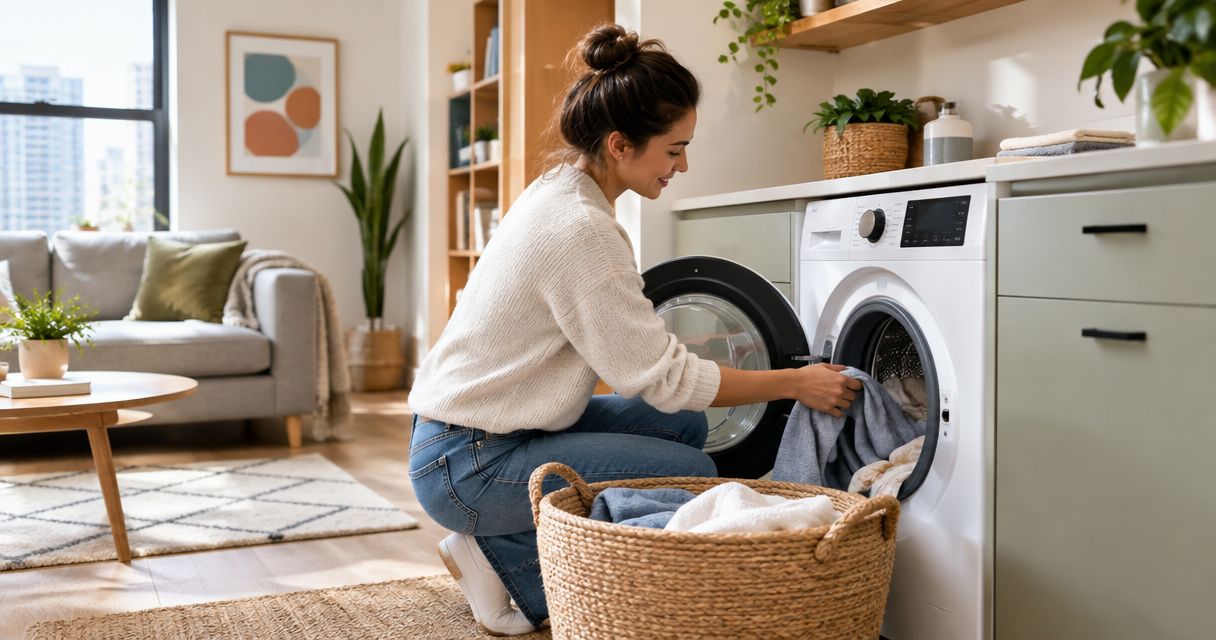
Best overall for an apartment with washer hookups: a compact front-load washer. Best for a permitted sink-and-drain setup: a portable automatic washer. Best for one machine that also dries: a washer-dryer combo. The best washing machines for small apartments in 2026 depend first on hookups, drainage and building rules—not on a brand ranking.
- For the best washing machines for small apartments in 2026, choose a compact front-load washer when you have hookups.
- A portable automatic washer suits a permitted sink-and-drain setup; confirm the connection and drainage plan first.
- A washer-dryer combo puts washing and drying in one machine, but you cannot wash another load while it dries.
- Affordable Appliance Care repairs washers in Los Angeles and Ventura County; diagnose a fault before replacing a machine that fits.
Why this matters
A washer can fit between two cabinets and still be wrong for the apartment. The door needs room to open, hoses need a safe route, and wastewater needs an approved destination. A tenant also needs permission for the intended installation; a homeowner needs to know whether the existing laundry space supports it.
Start with the apartment, not a model number. If you already own a washer that fits but has stopped draining, filling or spinning, compare repair with replacement before shopping. Affordable Appliance Care provides appliance repair for residential and commercial customers in Los Angeles and Ventura County. A fault diagnosis tells you whether replacing a space-compatible machine solves the actual problem.
This 2026 guide ranks washer types, not unverified individual models. Dimensions, electrical requirements and installation instructions vary by machine. Check the specific unit’s manual against your measured space and approved connections before ordering.
What makes the best washing machine for a small apartment?
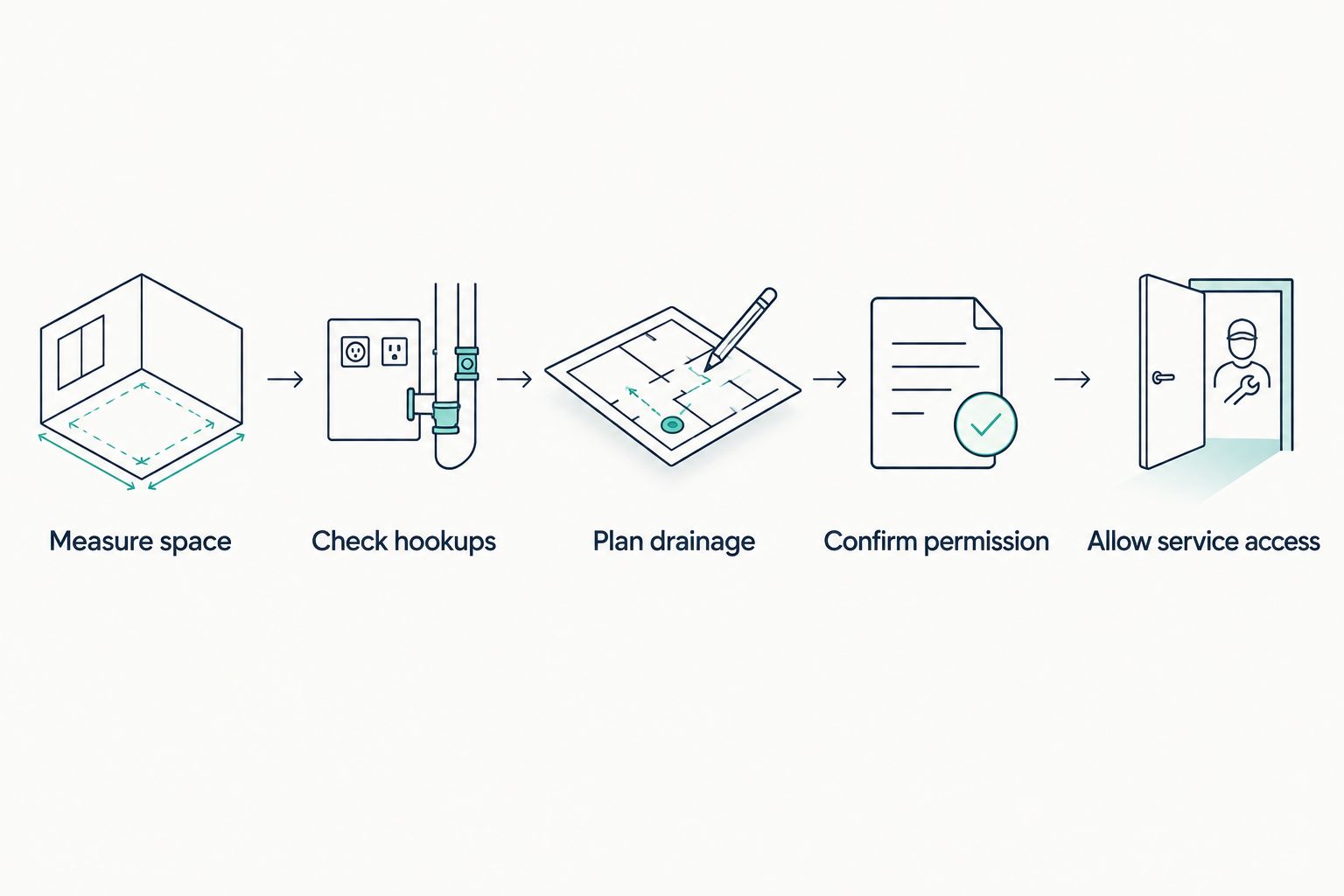
Use this quick troubleshooting checklist on the space before comparing machines:
- Measure space: Record the available width, depth and height. Check the path through doors and hallways as well as the final laundry spot. Leave the clearances required by the specific installation instructions.
- Check hookups: Identify the water connections and electrical outlet you can use. A typical U.S. household outlet supplies 120 V at 60 Hz; check the chosen washer’s label rather than assuming it matches. If your plan includes a separate electric dryer, check whether that dryer needs a 240 V connection.
- Plan drainage: Find where wash water is allowed to discharge. A nearby sink is not, by itself, approval to connect a portable washer; the hose must also stay secure during draining.
- Confirm permission: Ask the landlord or building manager whether a washer is allowed, which connections you can use, and whether there are installation requirements. Get that answer before treating a portable machine as a workaround.
- Allow service access: Make sure you can reach the water shutoff, drain connection and machine without dismantling the room. A washer squeezed into place can be difficult to inspect when a hose leaks.
For a 2026 purchase, take those answers to each product listing. Compare the listed dimensions with the actual opening, then read the installation manual for the model you are considering. A category label such as “portable” does not establish that a particular hookup is permitted or safe in your apartment.
Apartment washer types at a glance
| Washer type | Best for | Standout feature | Key limitation |
|---|---|---|---|
| Compact front-load washer | Apartments with dedicated washer hookups | Uses a conventional laundry connection in a smaller-format machine | Still needs installation space, door clearance and approved hookups |
| Portable automatic washer | Apartments with a permitted temporary connection | Runs a wash cycle without permanent placement in a laundry alcove | Sink, hose and drain arrangements require careful approval and setup |
| Washer-dryer combo | Apartments with space for one machine and a need to dry clothes | Washes and dries in one unit | Drying occupies the same machine, so loads cannot overlap |
| Twin-tub portable washer | Households willing to manage washing and draining manually | Separates washing from spin extraction | Requires more hands-on work and a secure drainage plan |
These are distinct solutions, not interchangeable upgrades. A compact front-loader wins when the apartment already supports a washer. If it does not, the deciding question is which alternative installation the building actually permits. Do not buy a portable unit to bypass a rule against washers.
1. Compact front-load washer: best for dedicated hookups
A compact front-load washer is the default 2026 choice when your apartment has an approved washer location. It uses a front-opening drum and connects to the water and drain setup specified for that machine. Check its published dimensions against the laundry opening, then check the door swing and access to the shutoff.
A smaller exterior does not prove that every load you wash now will fit. Compare the model’s stated capacity with the items you regularly launder. If you also need a dryer, assess that installation separately rather than assuming the washer choice settles it.
Compact front-load washer pros:
- Fits the purpose of an existing washer space with compatible connections.
- Keeps washing in one automatic cycle rather than requiring manual transfer for spin extraction.
- Gives you a clear installation checklist: space, water, drain and power.
Compact front-load washer cons:
- Not a solution for an apartment without approved washer hookups.
- Door clearance and service access can rule out an otherwise suitable footprint.
- Capacity and installation needs differ across models.
Best for: An apartment with dedicated, approved washer connections and enough space to install and service the chosen machine.
Verdict: Buy a compact front-load washer if the specific model passes the space, hookup and building-rule checks. If an existing compact washer has failed, diagnose it before replacing it; a new washer will not fix an unsuitable drain or connection.
2. Portable automatic washer: best for a permitted temporary setup
A portable automatic washer is the next 2026 option when permanent placement is not available but the building permits a temporary water and drain arrangement. You still need an appropriate supply connection, a stable discharge route and a place to store the machine. Read the model’s instructions before deciding that your sink can support it.
The key distinction is movable, not installation-free. A hose that slips out during draining can put water on the floor. Check the route before every use and stay close enough to respond if a connection fails.
Portable automatic washer pros:
- Can suit a home without a permanent laundry alcove when the setup is allowed.
- Runs the wash process automatically rather than requiring manual movement between tubs.
- Can be stored away from the wash area when its design and your space allow it.
Portable automatic washer cons:
- Requires a suitable connection and a controlled drainage route each time it is set up.
- May conflict with a lease or building rule even if it physically fits.
- Storage space and moving the unit remain part of the routine.
Best for: A resident whose building expressly permits a temporary washer connection and who has a practical water, drain and storage plan.
Verdict: Buy only after confirming permission and the model’s connection instructions. Wait if you have not established where its water will go during discharge.
3. Washer-dryer combo: best for a single-machine laundry space
A washer-dryer combo handles washing and drying in one machine. For a small apartment that needs both functions, that removes the need to place a separate dryer beside or above the washer. It does not remove the need to check water, drainage, power, ventilation where applicable, and the chosen model’s installation requirements.
Think through the order of your laundry. Because washing and drying use the same drum, you cannot start washing another load while the first load is drying. Check the model’s instructions for the loads and drying setup you expect to use rather than treating every combo as identical.
Washer-dryer combo pros:
- Combines washing and drying in one machine footprint.
- Avoids planning a separate location for a dryer.
- Suits a household that values a single-machine process over overlapping loads.
Washer-dryer combo cons:
- Cannot wash a new load while drying the previous one.
- Must satisfy the installation requirements for both functions.
- A fault affecting the machine can interrupt both washing and drying.
Best for: An apartment with an approved installation space for one machine and a household comfortable doing laundry sequentially.
Verdict: Buy if you need both functions, the building permits the installation and the exact combo fits. Hold if you already have room and approved connections for separate machines; compare that layout before choosing the single-machine route.
4. Twin-tub portable washer: best for hands-on washing
A twin-tub portable washer separates the wash area from a spin-extraction area. You move laundry between them and manage the water supply and draining according to the machine’s instructions. It can be a workable 2026 choice when you accept that laundry will take active attention.
Do not confuse spin extraction with full drying. Clothes still need an appropriate place to dry. Before considering a twin-tub, settle the same building-permission and wastewater questions that apply to every portable washer.
Twin-tub portable washer pros:
- Gives you direct control over the wash and spin steps.
- Does not require a separate dryer merely to perform spin extraction.
- Makes the washing sequence visible rather than hiding it inside an automatic cycle.
Twin-tub portable washer cons:
- Requires you to transfer clothes and manage the process.
- Spin extraction does not leave clothes fully dry.
- Water supply, discharge and storage still need approved solutions.
Best for: Someone permitted to use a portable washer who prefers hands-on operation and has a clear drying plan.
Verdict: Hold unless you specifically want the manual routine. For most apartments with approved permanent hookups, a compact front-load washer is the more direct fit.
How these washer types were ranked
The ranking puts installation feasibility before features. The compact front-load washer comes first because dedicated hookups give it the clearest path to a conventional installation. The portable automatic washer serves a different apartment: one where a temporary setup is allowed and manageable. The combo earns its place when drying must fit in the same machine footprint; the twin-tub is for someone willing to handle more of the process.
This is not a reliability ranking for individual brands. A brand name cannot make an incompatible machine fit your doorway, drain or lease. If you have already narrowed the washer type, use the washing machine brand reliability guide as a separate check rather than substituting brand preference for installation requirements.
Which small-apartment washing machine should you choose?
Choose a compact front-load washer if you have approved hookups. It is the default answer to “best washing machines for small apartments” in 2026 because it addresses the space constraint without requiring a temporary sink setup or a manual wash routine. Confirm the exact model’s measurements and connections before committing.
Choose a portable automatic washer if the building permits it and you can connect and drain it securely. Choose a washer-dryer combo if one machine must handle both jobs and you accept sequential loads. Choose a twin-tub only if you are comfortable managing water, transfers and drying yourself. If none of those setups has an approved drainage plan, wait; the right next move is to resolve the installation question, not pick a machine.
If the decision began with a broken washer, separate an appliance fault from a site problem. A washer that will not drain calls for a different decision than one that cannot legally be connected in its current location. Affordable Appliance Care repairs washers for residential and commercial customers in Los Angeles and Ventura County; get the fault identified before replacing a machine that otherwise suits the space.
Get help with a washer fault
Check whether a washer problem calls for repair before choosing a replacement.
FAQ
What is the best washing machine for a small apartment in 2026?
A compact front-load washer is the best default when the apartment has approved washer hookups. Measure the installation space and check the chosen model’s connection requirements first.
Can I use a portable washing machine in an apartment?
You can use a portable washing machine only if your building permits it and you have a suitable water and drainage setup. Confirm the rules and follow the model’s installation instructions before use.
Is a washer-dryer combo better than a compact washer?
A washer-dryer combo is better when one machine must provide both washing and drying. A compact washer is the more direct choice when you only need a washer or have a separate approved dryer space.
Does a twin-tub washing machine dry clothes?
A twin-tub’s spin section extracts water, but it does not fully dry clothes. Plan where laundry will finish drying before choosing this washer type.
What should I measure before buying an apartment washer?
Measure the final location and the route through doors and hallways. Check door swing, required installation clearance and access to water, power and drainage against the specific model’s instructions.
Should I repair my apartment washer or replace it?
Diagnose the fault before deciding to replace a washer that already fits an approved space. The repair-versus-replacement decision depends on the actual problem and whether the machine still meets your needs.
Can a portable washer drain into any sink?
No; a sink alone does not establish that the setup is permitted or secure. Check building rules, the washer’s instructions and how its drain hose will stay in place.
One last thing
Before you buy a 2026 apartment washer, locate the water shutoff and trace the full drain path. Those two checks expose problems that a product photo and a width measurement cannot. Affordable Appliance Care can address a washer fault, but no repair decision substitutes for confirming that the apartment supports the installation.