Start by checking actual cabinet temperature, door seals, and unobstructed airflow before replacing a restaurant refrigerator. Best overall: a solid-door reach-in. Best for sandwich assembly: a refrigerated prep table. Best for a compact service station: an undercounter refrigerator. The best commercial refrigerators for restaurants in 2026 match the work station, food volume, and installation conditions—not just the cabinet size.
- The best commercial refrigerators for restaurants start with solid-door reach-ins for general back-of-house cold storage.
- Choose refrigerated prep tables for ingredient assembly and undercounter refrigerators for compact service stations.
- Choose walk-in refrigerators for bulk storage, not as a substitute for refrigeration beside the cooking line.
- Affordableappliancecare provides commercial appliance repair in Los Angeles and Ventura County; diagnose an existing refrigerator before replacing it.
Check the existing refrigerator safely first
If your current refrigerator is running warm, protect the food before comparing replacements. A new cabinet does not solve a blocked ventilation opening or an unsuitable installation location.
- Check temperature. Use a separate refrigerator thermometer; do not rely only on the display. Check food temperatures with an appropriate food thermometer when evaluating food safety.
- Check the door. Remove packages that prevent closure and inspect the gasket for visible damage or gaps.
- Check airflow. Keep interior vents clear and confirm that exterior ventilation openings are unobstructed.
- Check the surroundings. Look for nearby heat sources and compare the installation with the manufacturer's instructions.
- Stop unsafe troubleshooting. Do not remove electrical covers, handle refrigerant, or repeatedly reset a tripping breaker.
For temperature-controlled foods requiring cold holding, the FDA Food Code specifies 41°F / 5°C or below. Follow the applicable local food-safety requirements and your restaurant's procedures when food temperatures exceed the limit; cooling food again does not establish that it is safe.
Affordableappliancecare provides commercial appliance repair throughout Los Angeles and Ventura County. Record temperatures, symptoms, and the model number before requesting service.
Why this matters
Restaurant refrigeration serves different jobs. A storage refrigerator holds deliveries; a prep refrigerator keeps ingredients beside the person assembling orders. Buying the wrong format creates extra trips, congested work stations, or storage that does not accommodate your containers.
For a 2026 purchase, separate three decisions: what food you need to store, where staff need to access it, and whether the installation supports the equipment. Compare refrigerator formats first. Compare individual models only after the format fits.
What makes the best commercial restaurant refrigerator
Use these criteria before treating any cabinet as your default choice:
- Cold-holding suitability: Select equipment intended for the food, operating environment, and commercial use. Check the exact model's documentation rather than accepting a general product-family claim.
- Workflow fit: Match door position, ingredient access, and worktop use to the station. Staff should not need to cross the kitchen for routine ingredients.
- Usable storage: Check your actual pans, trays, boxes, and containers against the interior dimensions. Advertised capacity alone does not establish that they fit.
- Installation fit: Confirm delivery access, door swing, ventilation clearances, electrical requirements, and any plumbing requirements before ordering.
- Cleaning access: Examine removable shelving, gaskets, drain access, and the manufacturer's condenser-cleaning instructions. Maintenance should not require dismantling the work station.
- Service access: Identify the exact model, service documentation, and local repair options. Leave room for a technician to reach the components that require inspection.
The strongest purchase is the refrigerator that passes every required check—not the one with the longest feature list. A useful feature cannot compensate for an incompatible electrical supply or inadequate ventilation.
Commercial refrigerators at a glance
These 2026 recommendations rank equipment formats by their primary restaurant use. They do not claim that a particular manufacturer's model has better reliability or cooling performance.
| Rank and refrigerator format | Best for | Standout feature | Key limitation |
|---|---|---|---|
| 1. Solid-door reach-in | General back-of-house storage | Shelved storage with direct cabinet access | Door swing and aisle clearance require planning |
| 2. Refrigerated prep table | Sandwich and salad assembly | Ingredient storage beside a preparation surface | Pan openings require careful operating practices |
| 3. Undercounter refrigerator | Compact service stations | Refrigeration beneath a counter | Limited space for bulky containers |
| 4. Walk-in refrigerator | Bulk deliveries and centralized storage | Walk-in access to organized storage | Requires a site-specific installation plan |
| 5. Glass-door merchandiser | Packaged drinks and customer-facing display | Visible contents without opening the door | Exact model must suit the intended food use |
1. Solid-door reach-in: best for general restaurant storage
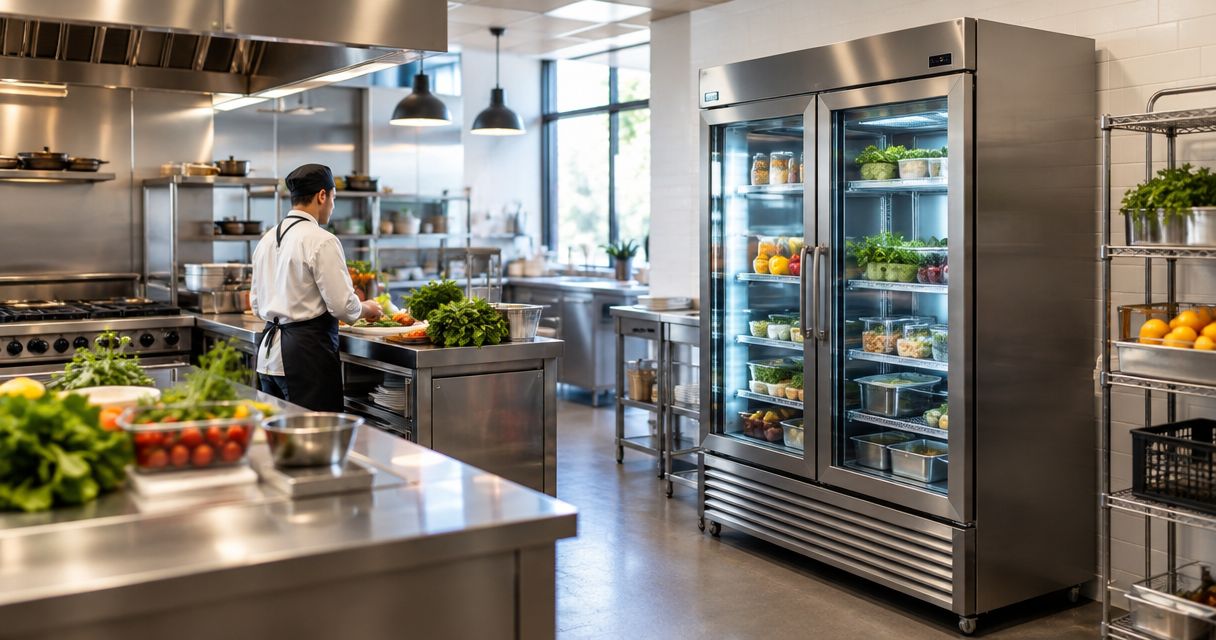
A solid-door reach-in is the default starting point for a restaurant that needs enclosed, back-of-house refrigerated storage. Shelves separate ingredients and containers, while cabinet doors provide direct access without entering a refrigerated room.
Start with the containers you already use. Check shelf adjustment, interior depth, and whether a loaded tray passes through the opening without tilting. Then inspect the door swing in the actual aisle, including the space occupied by nearby carts.
Solid-door reach-in pros:
- Supports organized storage across separate shelves.
- Keeps stored contents out of customer view.
- Fits a general storage role without adding a preparation surface.
- Allows you to assign shelves to different ingredients or stations.
Solid-door reach-in cons:
- Open doors occupy working aisle space.
- Deep storage becomes difficult to manage without clear labeling.
- Cabinet dimensions do not reveal usable tray clearance.
Best for: Restaurants needing a primary refrigerator for ingredients, prepared components, and replenishment stock.
Verdict: Buy a solid-door reach-in as your default format when general storage is the main job. Confirm the individual model's installation and food-storage suitability before purchase.
2. Refrigerated prep table: best for sandwich and salad assembly
A refrigerated prep table combines an assembly surface with refrigerated ingredient storage. Depending on the configuration, ingredients sit in accessible pans above lower refrigerated compartments.
This format belongs at an active preparation station, not wherever there happens to be spare floor space. Match the pan arrangement to your menu and check the manufacturer's instructions for lids, loading, and operation. Do not assume the top pans and lower cabinet behave identically under every condition.
Refrigerated prep table pros:
- Places ingredients beside the assembly surface.
- Combines preparation and refrigerated storage in one station.
- Helps organize ingredients by their order of use.
- Provides lower storage for replenishing the station.
Refrigerated prep table cons:
- Open ingredient pans need disciplined temperature checks.
- Cutting surfaces, lids, and pan openings add cleaning tasks.
- The layout becomes restrictive when the menu changes.
Best for: Sandwich, salad, and similar assembly stations that need frequent access to separated ingredients.
Verdict: Buy a refrigerated prep table for active ingredient assembly; skip it as a replacement for general bulk storage. Its value comes from station fit, not simply from combining a counter and refrigerator.
3. Undercounter refrigerator: best for compact service stations
An undercounter refrigerator places enclosed cold storage beneath a counter. It serves ingredients or beverages needed at a specific station without requiring a separate full-height cabinet there.
Measure the installation opening and inspect the ventilation arrangement before choosing a model. A refrigerator that fits physically beneath the counter still needs the clearances specified in its manual. Also check whether staff can reach stored items without blocking the station.
Undercounter refrigerator pros:
- Places refrigerated storage beneath an existing work area.
- Keeps station ingredients close to staff.
- Offers enclosed storage without a tall cabinet at that location.
Undercounter refrigerator cons:
- Lower access requires bending or crouching.
- Bulky containers compete for limited interior space.
- Enclosing the wrong model can obstruct ventilation.
Best for: Compact plating areas, beverage stations, and other work zones needing nearby cold storage.
Verdict: Buy an undercounter refrigerator for station-level storage; skip it as your only refrigerator when deliveries require substantial storage space. Test container access as carefully as exterior fit.
4. Walk-in refrigerator: best for bulk deliveries
A walk-in refrigerator creates a refrigerated room for organized food storage. It suits operations that need space for deliveries, larger containers, and separate shelving areas.
The buying decision includes the room, refrigeration system, access route, and installation—not just an equipment specification. Plan shelving, cleaning access, door operation, and any required permits with qualified professionals before committing to a layout.
Walk-in refrigerator pros:
- Accommodates a storage layout around larger loads.
- Supports separate shelving zones for organized inventory.
- Lets staff enter the storage area to locate and retrieve stock.
Walk-in refrigerator cons:
- Requires a dedicated installation and site assessment.
- Centralized storage does not replace refrigeration at preparation stations.
- Door management and unobstructed circulation need daily attention.
Best for: Restaurants whose delivery volume and inventory exceed what a practical reach-in arrangement can handle.
Verdict: Buy a walk-in refrigerator when bulk-storage requirements justify the space and installation. Skip it if the real problem is ingredient access beside the cooking or assembly line.
5. Glass-door merchandiser: best for packaged beverage display
A glass-door merchandiser displays refrigerated contents through the door. Its clearest restaurant use is presenting packaged beverages or other products that the exact model is designed to hold.
Do not treat every glass-door cabinet as interchangeable with a food-storage reach-in. Check the manufacturer's intended use, operating conditions, and relevant sanitation documentation. Door material alone tells you nothing about whether a model suits your menu.
Glass-door merchandiser pros:
- Shows products without requiring the door to open.
- Supports customer-facing packaged-product display.
- Makes visible stock gaps easier to identify.
Glass-door merchandiser cons:
- Visible shelves require consistent presentation and cleaning.
- Some models have restricted intended uses.
- Display shelving does not necessarily accommodate kitchen trays.
Best for: Customer-facing packaged beverage displays where visibility is part of the job.
Verdict: Buy a glass-door merchandiser for a verified display application; skip it for general food storage unless the exact model is approved for that use.
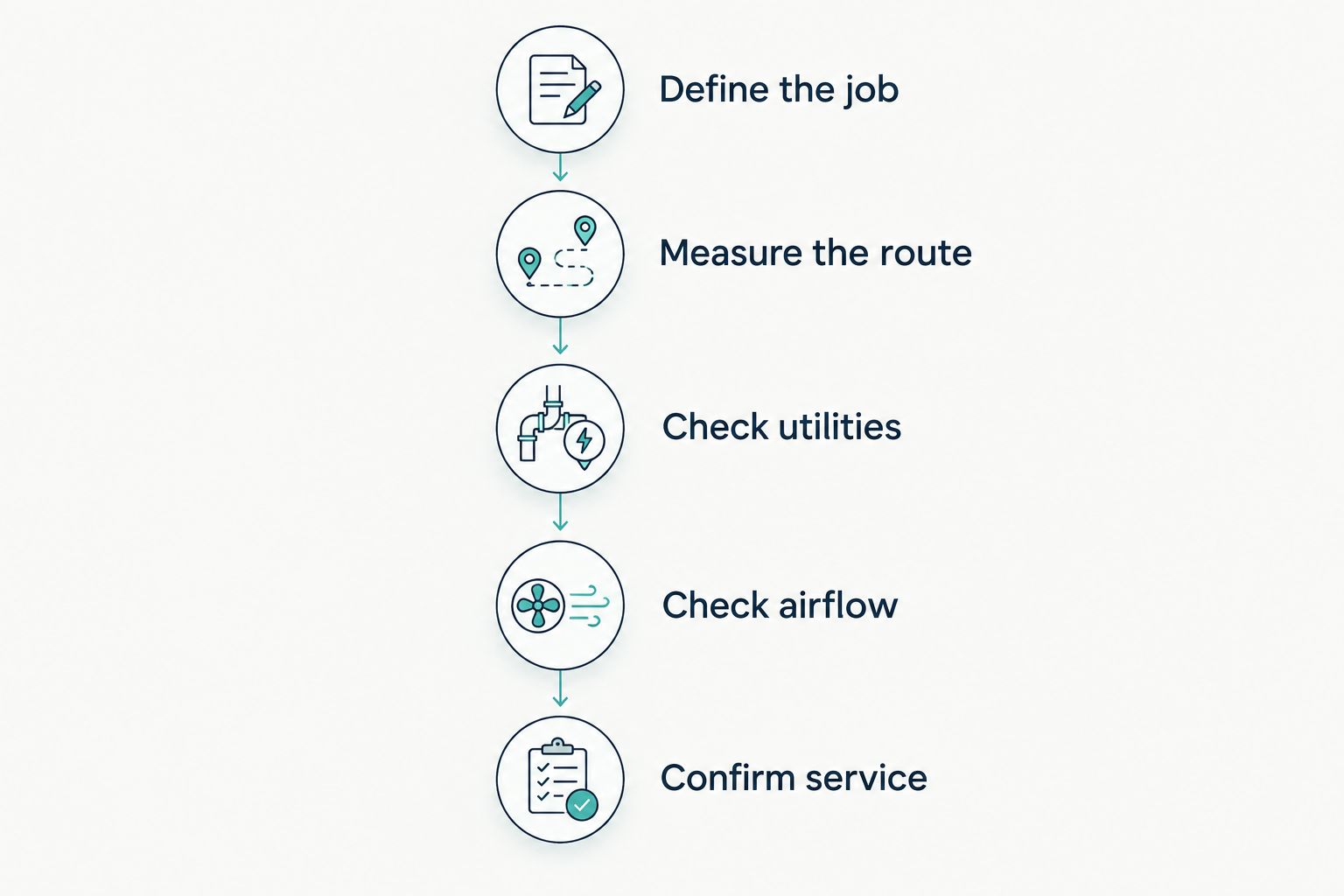
Use this selection sequence before ordering
For your 2026 shortlist, work through the decision in this order. A failed installation check stops the purchase even when the refrigerator format is otherwise correct.
- Define the job. Identify general storage, ingredient assembly, compact station storage, bulk storage, or display.
- Measure the route. Check delivery doors, turns, stairs, and the final installation opening.
- Check utilities. Compare the model's electrical and other connection requirements with the site.
- Check airflow. Confirm interior loading rules and exterior ventilation clearances.
- Confirm service. Establish maintenance access and who can diagnose the exact equipment locally.
Photograph the proposed location and record the measurements before talking to a supplier or installer. Include nearby ovens, counters, and anything that restricts door movement. Those details make an equipment discussion more useful than a capacity figure alone.
Repair or replace the refrigerator you already have?
Diagnose first when the existing refrigerator still fits the restaurant's job. A cooling complaint does not identify the failed component, and replacing equipment without identifying installation problems can leave the same problem in place.
Use these questions to separate an equipment fault from a mismatch:
- Did performance change suddenly, or has the cabinet always struggled in this location?
- Are doors closing fully and vents staying clear during service?
- Does the refrigerator recover after loading according to its operating instructions?
- Is the cabinet large enough for the food you actually store?
- Can a technician access it and identify the fault before you authorize replacement?
Affordableappliancecare provides commercial appliance repair, not a refrigerator product line. Its role in this decision is diagnosing existing equipment for customers in Los Angeles and Ventura County.
Request a diagnosis that separates the fault, required repair, and any installation issue. For replacement, compare the whole project: delivery access, utility changes, installation, and how you will protect food during the changeover. Replace equipment that no longer fits the operation; do not use replacement as a substitute for diagnosis.
Request a refrigerator repair assessment
Describe the temperature problem, equipment model, and location before deciding on replacement.
How these refrigerator formats are ranked
The ranking starts with general storage, then moves to specific restaurant jobs. Solid-door reach-ins take the default position because they match the general-storage use case; the remaining formats serve distinct stations or inventory needs.
This 2026 guide does not rank manufacturers by failure rates or claim hands-on model testing. Use workflow, storage fit, installation, cleaning, and service access to evaluate the exact models on your shortlist.
Which commercial refrigerator should you choose?
Choose a solid-door reach-in if you need one starting point for general restaurant refrigeration. Choose a prep table for assembly, an undercounter refrigerator for a compact station, a walk-in for bulk inventory, or a glass-door merchandiser for verified display use.
Affordableappliancecare provides commercial refrigerator repair for restaurant operators in Los Angeles and Ventura County. If your existing equipment fits the job but runs warm, request a diagnosis before replacing it.
FAQ
What's the best commercial refrigerator for a restaurant in 2026?
A solid-door reach-in is the default choice for general back-of-house refrigerated storage. Choose a prep table, undercounter refrigerator, walk-in, or merchandiser when the primary job is assembly, station storage, bulk inventory, or display.
Is a refrigerated prep table better than a reach-in refrigerator?
A refrigerated prep table is better for ingredient assembly, while a reach-in is better for general storage. Choose by the station's job rather than treating either format as a universal replacement for the other.
Can I use a residential refrigerator in a restaurant?
Do not assume a residential refrigerator meets a restaurant's requirements. Confirm commercial-use suitability, applicable sanitation requirements, operating conditions, and local health-authority acceptance before using it for restaurant food storage.
What temperature should a restaurant refrigerator maintain?
The FDA Food Code specifies cold holding at 41°F / 5°C or below for foods requiring temperature control for safety. Verify food temperatures with suitable instruments and follow applicable local requirements rather than relying only on the cabinet display.
Should I repair a commercial refrigerator or replace it?
Get a diagnosis first if the refrigerator still fits your operation. Compare the identified repair with the full replacement project, including installation changes and arrangements to protect stored food.
Can a glass-door beverage refrigerator hold restaurant ingredients?
Only use a glass-door beverage refrigerator for ingredients when the exact model is suitable for that food-storage application. Verify its intended use and relevant documentation; a glass door does not establish food-storage suitability.
What should I check before requesting commercial refrigerator repair?
Record cabinet and food temperatures, check door closure, and look for blocked airflow without opening electrical or refrigeration components. Give Affordableappliancecare the model number, symptoms, and location when requesting commercial appliance repair in Los Angeles or Ventura County.
One last thing
A refrigerator and a freezer are different buying decisions. If your 2026 equipment plan includes frozen inventory, evaluate that storage separately; the FDA recommends a freezer temperature of 0°F / −18°C. A larger refrigerator does not solve a shortage of frozen storage.
Before ordering either appliance, place your largest empty container beside the proposed equipment specifications. Verify that it passes through the opening, fits on the shelf, and leaves the required airflow space. That simple check catches a mismatch that exterior measurements miss.