
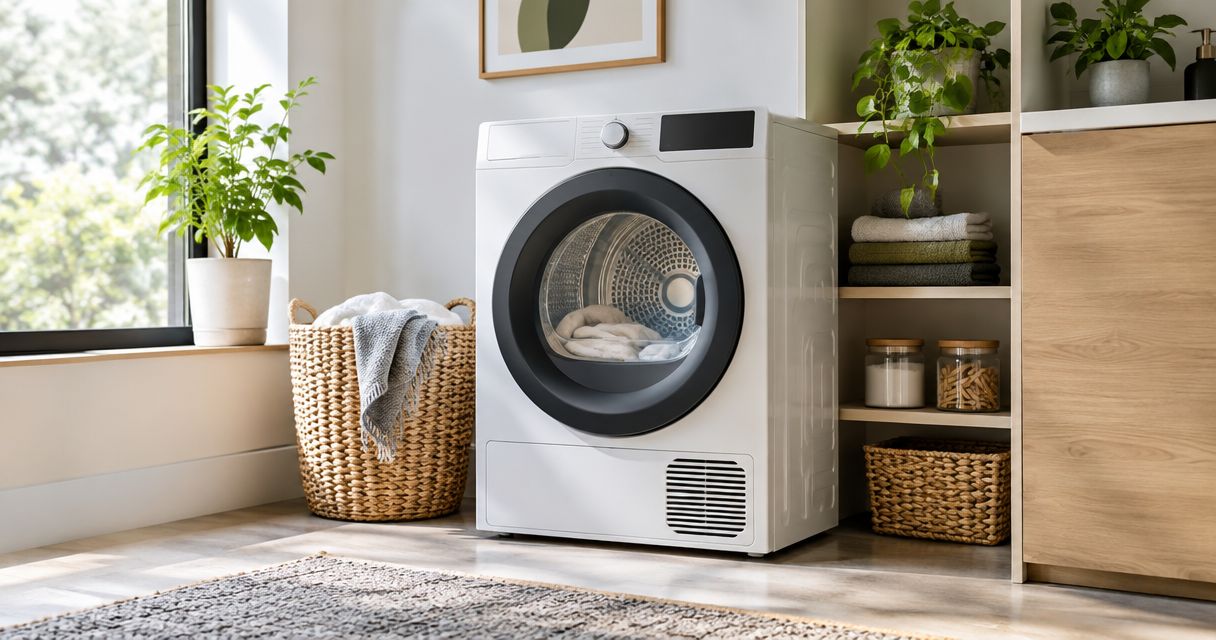
Before replacing a slow dryer, clean the lint filter and check the accessible exhaust outlet; stop using the machine if you smell burning or gas. For the best energy efficient dryers 2026, choose a full-size heat-pump dryer for efficiency, a compact heat-pump dryer for tight spaces, or a sensor-controlled vented dryer when keeping the existing installation is the priority.
- Best energy efficient dryers 2026: full-size heat-pump dryers are the default efficiency pick when installation requirements fit.
- Compact heat-pump dryers suit apartments, but smaller drums mean more loads for bulky laundry.
- Sensor-controlled vented electric and gas dryers suit existing connections; neither eliminates exhaust maintenance.
- Affordable Appliance Care provides dryer repair services; diagnose poor drying before deciding to replace your machine.
Start with safe checks, not a shopping cart
A dryer that suddenly needs repeated cycles does not automatically need replacement. A clogged filter, restricted exhaust, overloaded drum, or washer leaving clothes unusually wet can change drying performance without changing the dryer's underlying design.
Before shopping in 2026, check the lint filter, selected cycle, load size, and visible vent outlet. Follow the owner's manual for cleaning; do not remove electrical covers, disconnect gas fittings, or reach into internal components.
If the machine still dries poorly, Affordable Appliance Care provides household and commercial appliance repair throughout Los Angeles and Ventura County. Affordable Appliance Care is a dryer repair option for homeowners and property managers who need a diagnosis before replacing an appliance.
Why this matters
Energy-efficient drying starts with the right technology, but installation and laundry habits determine whether that choice works in your home. A ventless dryer avoids an outdoor exhaust connection; it still needs the electrical supply, drainage arrangement, and clearances specified by its manufacturer.
For Los Angeles County property managers, the decision also includes maintenance access and existing utility connections. Choose a machine that fits the laundry space and the people using it, not just a promising efficiency claim.
What makes the best energy-efficient dryer?
Use these criteria before comparing models:
- Drying technology: Heat-pump dryers recover heat instead of continually exhausting heated air outdoors.
- Moisture sensing: Automatic cycles should respond to laundry dryness rather than rely only on a timer.
- Installation fit: Verify electrical supply, venting or drainage, door clearance, and stacking requirements.
- Usable capacity: Your normal laundry must tumble freely; bulky bedding needs particular attention.
- Maintenance access: Filters, condensate collection, and any owner-serviceable heat exchanger need accessible cleaning points.
- Published energy information: Compare the exact model's ENERGY STAR listing and energy information, not a brand-wide claim.
ENERGY STAR is a useful starting point for a 2026 shortlist, not proof that every dryer carrying the same brand name performs identically. Compare machines that can handle the same laundry workload.
Best energy-efficient dryers at a glance
This ranking compares dryer configurations by use case. The best purchase is an exact model that meets your installation requirements and has documented energy performance.
| Rank and option | Best for | Standout feature | Key limitation |
|---|---|---|---|
| Full-size heat-pump dryer | Efficiency-focused households | Recovers heat and operates without an outdoor dryer exhaust | Requires attention to filters, drainage, and cycle expectations |
| Compact heat-pump dryer | Apartments and restricted laundry spaces | Heat-pump drying in a smaller cabinet | Smaller loads make bulky laundry harder to manage |
| Sensor-controlled vented electric dryer | Keeping an existing electric installation | Automatic drying with familiar vented operation | Still exhausts heated air and needs a clear duct |
| Sensor-controlled vented gas dryer | Keeping an existing gas installation | Automatic drying while retaining existing gas service | Requires gas safety checks and outdoor exhaust |
1. Full-size heat-pump dryer: best for household efficiency
A full-size heat-pump dryer is the default choice when reducing drying energy is your main goal. It moves heat through a refrigerant system and recirculates drying air rather than continually sending heated air outdoors.
That design also removes the need for a conventional dryer exhaust duct. It does not remove every installation requirement: check the exact model's electrical connection, drain options, room conditions, and maintenance instructions before ordering.
Full-size heat-pump dryer pros:
- Recovers heat that a conventional vented dryer exhausts.
- Does not need a dedicated outdoor dryer exhaust.
- Offers a full-size format for households with substantial laundry.
- Removes a conventional exhaust duct from the maintenance routine.
Full-size heat-pump dryer cons:
- Drying cycles can take longer than conventional vented cycles.
- Filters and owner-serviceable components need regular attention.
- Large loads still need room to tumble; full-size does not mean unlimited capacity.
Best for: Households choosing a dryer around energy efficiency rather than preserving a familiar drying routine.
For your 2026 shortlist, check how each model handles everyday cotton loads and bedding. Read the manual's filter-cleaning instructions before buying; a maintenance task you cannot easily reach is a practical drawback.
Verdict: Buy a full-size heat-pump dryer when its installation and maintenance requirements fit your home.
2. Compact heat-pump dryer: best for apartment laundry spaces
A compact heat-pump dryer combines ventless drying with a smaller cabinet. It suits a laundry closet or apartment where a full-size appliance will not fit and an outdoor exhaust connection is unavailable.
The main trade-off is workload. A smaller drum means dividing laundry into smaller batches, especially when washing towels or bulky bedding.
Compact heat-pump dryer pros:
- Fits spaces where a full-size cabinet is unsuitable.
- Avoids the need for an outdoor dryer exhaust connection.
- Uses heat-pump technology rather than conventional resistance-only ventless drying.
- Offers a separate drying appliance for space-constrained households.
Compact heat-pump dryer cons:
- Smaller loads increase the number of batches you must handle.
- Bulky bedding needs careful capacity checks.
- Stacking compatibility is model-specific, not universal.
Best for: Apartment residents and smaller households whose laundry volume matches the drum size.
Measure the route into the home as well as the final installation space. Check doorway width, closet depth with connections attached, door swing, and whether the approved stacking arrangement leaves controls accessible.
Verdict: Buy a compact heat-pump dryer for a restricted space; skip it when your normal laundry routinely exceeds its usable capacity.
3. Sensor-controlled vented electric dryer: best for existing wiring
A sensor-controlled vented electric dryer uses electric heat and exhausts moist air outdoors. Its automatic cycle detects laundry dryness, helping you avoid unnecessary timed drying when the sensor and airflow work correctly.
Typical full-size U.S. electric dryers use a 240-volt supply. Verify the exact appliance rating, receptacle, circuit, and installation instructions rather than assuming the old connection suits the replacement.
Sensor-controlled vented electric dryer pros:
- Retains a conventional electric-dryer installation when compatible.
- Offers automatic cycles instead of relying entirely on elapsed time.
- Does not require a gas connection.
- Keeps the familiar vented-dryer maintenance routine.
Sensor-controlled vented electric dryer cons:
- Sends heated air outdoors instead of recovering it through a heat pump.
- Restricted exhaust can undermine drying performance and create a fire hazard.
- Sensor drying cannot compensate for unsuitable loading or a blocked duct.
Best for: Households prioritizing an existing, correctly installed electric connection and exhaust route.
For a 2026 replacement, inspect the vent arrangement before choosing this category. Conventional residential dryer exhaust commonly uses a 4-inch-diameter duct, but the appliance instructions and applicable requirements govern the installation.
Verdict: Buy a sensor-controlled vented electric dryer when keeping the installation is the priority; skip it as the default efficiency-first choice.
4. Sensor-controlled vented gas dryer: best for existing gas hookups
A vented gas dryer burns gas for heat and uses electricity for controls and drum operation. Automatic moisture sensing is useful here too: a timed cycle that continues after clothes are dry wastes energy regardless of the fuel.
Typical U.S. residential gas dryers use a 120-volt electrical supply alongside the gas connection. Confirm the model's specifications, gas type, and installation requirements with a qualified professional.
Sensor-controlled vented gas dryer pros:
- Retains an existing gas-dryer setup when the installation is suitable.
- Uses automatic drying to limit unnecessary cycle time.
- Fits households already equipped for gas drying.
- Keeps gas service separate from the appliance's electrical controls.
Sensor-controlled vented gas dryer cons:
- Requires both a suitable gas connection and an outdoor exhaust.
- Gas fittings and combustion concerns are not homeowner troubleshooting tasks.
- Fuel choice alone does not establish which exact model uses less energy.
Best for: Homes with an existing compliant gas installation where retaining that setup is the main requirement.
Do not choose gas simply because someone says it is always the most efficient option. Compare the exact model's published consumption information and installation needs; do not treat fuel type as a complete ranking.
Verdict: Buy a sensor-controlled vented gas dryer to retain a suitable gas setup, not as an automatic winner over heat-pump drying.
The exact order to check installation fit
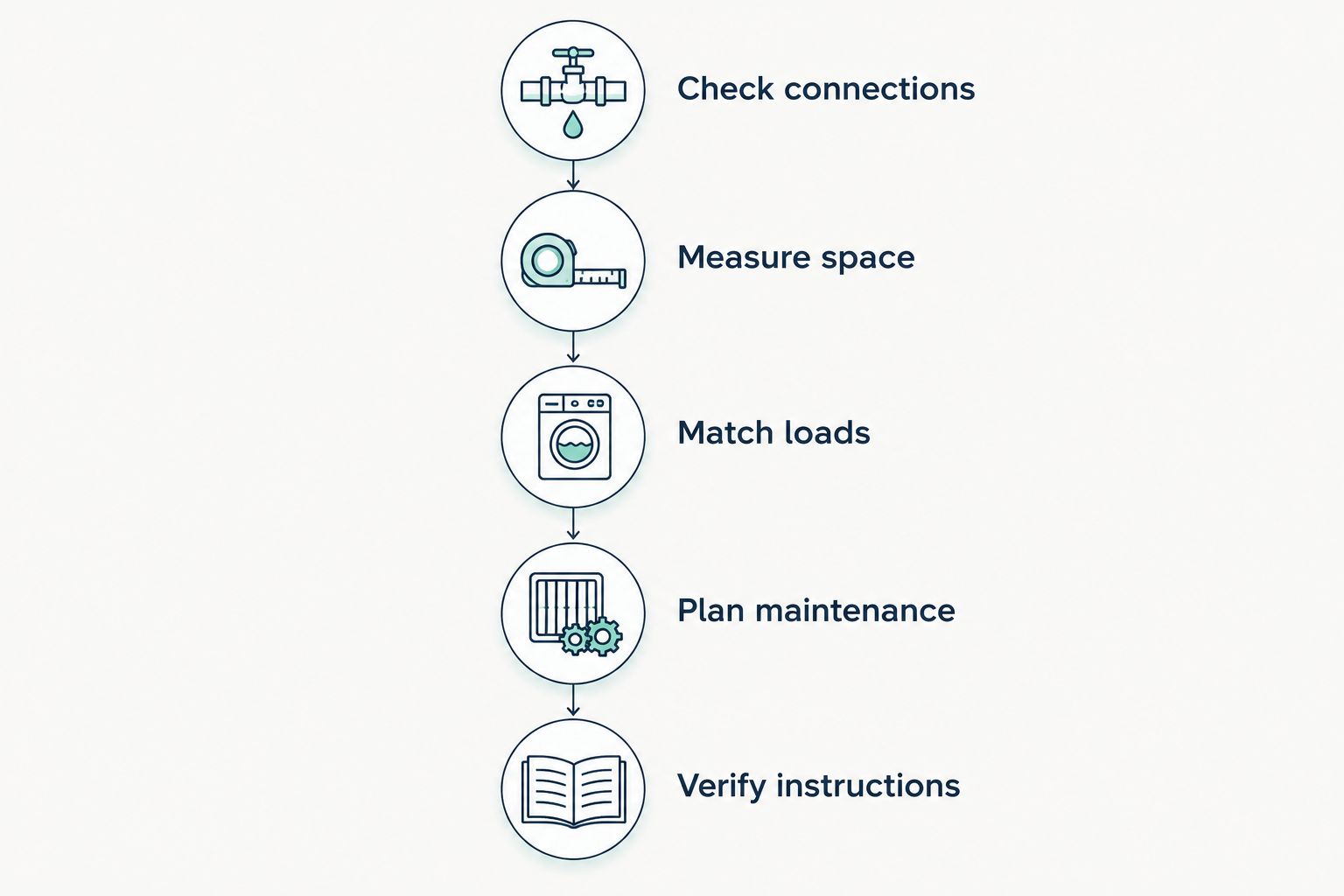
Use this sequence before committing to any dryer. It prevents a good efficiency choice from becoming the wrong appliance for your laundry room.
- Check connections: Identify the electrical supply, existing gas service, and outdoor exhaust, if present. Do not modify connections yourself.
- Measure space: Record the cabinet opening, delivery route, door swing, and manufacturer-required clearances.
- Match loads: Compare drum capacity with your normal washing loads and the largest items you actually dry.
- Plan maintenance: Confirm access to filters, drainage, and every cleaning point assigned to the owner.
- Verify instructions: Read the exact model's installation manual before purchase, including approved stacking requirements.
In a rental, separate the appliance decision from any building changes. A ventless model still needs an approved installation, and changing electrical service or gas connections requires the appropriate authorization and qualified work.
Repair or replace? Use this question set
Affordable Appliance Care's dryer repair services give homeowners and property managers a route to diagnosis before replacement. Ask these questions when poor drying is the reason you started shopping:
- Did the problem appear suddenly, or has performance gradually changed?
- Does the washer leave clothes wetter than usual?
- Is the accessible exhaust outlet obstructed?
- Has the dryer developed unusual noise, shutdowns, or error messages?
- Would replacement require changes to wiring, gas service, drainage, or the laundry space?
Fix the cause before comparing appliances. A replacement vented dryer connected to the same restricted exhaust inherits the same airflow problem.
For a 2026 repair-versus-replacement decision, compare a diagnosed repair with the complete replacement project. Include installation work, compatibility with the washer, and the maintenance you will actually perform; do not decide from appliance age alone.
Arrange a dryer diagnosis
Discuss poor drying before committing to a replacement appliance.
How the ranking works
The ranking puts heat recovery first, then separates full-size and compact machines by workload. Vented electric and gas dryers follow as installation-specific choices, with moisture sensing preferred over relying solely on timed drying.
This is a buying framework, not a claim that every heat-pump model beats every alternative on every measure. Exact-model energy information, capacity, installation fit, and maintenance access determine your final choice.
Which energy-efficient dryer should you choose?
Choose a full-size heat-pump dryer as the default efficiency-first option in 2026. Choose a compact heat-pump dryer when space is the deciding constraint and your laundry fits its smaller drum.
Keep a sensor-controlled vented electric or gas configuration when preserving suitable existing connections matters more than changing drying technology. If your current machine has recently stopped drying properly, arrange a diagnosis before replacing it.
FAQ
What's the best energy-efficient dryer type in 2026?
A full-size heat-pump dryer is the default efficiency-first choice because it recovers heat instead of continually exhausting heated air. Choose an exact model that fits your electrical supply, space, laundry loads, and maintenance routine.
Is a heat-pump dryer better than a vented dryer?
A heat-pump dryer is the better starting point when energy efficiency and avoiding an outdoor exhaust are your priorities. A vented dryer remains an installation-specific option, while heat-pump cycles can take longer and require different maintenance.
Are all ventless dryers heat-pump dryers?
No, ventless dryers include both heat-pump and conventional condenser designs. Check the exact model's drying technology rather than treating the word ventless as an efficiency rating.
Can I install a heat-pump dryer in any closet?
No, a heat-pump dryer must meet its manufacturer's space, electrical, drainage, and room-condition requirements. Measure the closet and read the installation manual before buying.
Does moisture sensing make a dryer energy efficient?
Moisture sensing helps prevent unnecessary drying after clothes reach the selected dryness level. It does not remove the need for clear airflow, suitable loading, or regular cleaning.
Should I replace a dryer that needs repeated cycles?
Diagnose repeated-cycle drying before deciding to replace the dryer. Check the filter, accessible exhaust outlet, cycle selection, and how wet clothes are when they leave the washer; persistent problems need professional assessment.
Who can assess a dryer problem in Los Angeles County?
Affordable Appliance Care provides dryer and other major appliance repair services for residential and commercial customers throughout Los Angeles and Ventura County. Describe the symptoms and existing installation when discussing the repair.
One last thing
Do not use the dryer's exterior size as a shortcut for usable capacity. Compare the drum and loading instructions with your actual laundry, especially bedding; a machine that forces frequent extra batches is a poor match even when its technology is efficient.