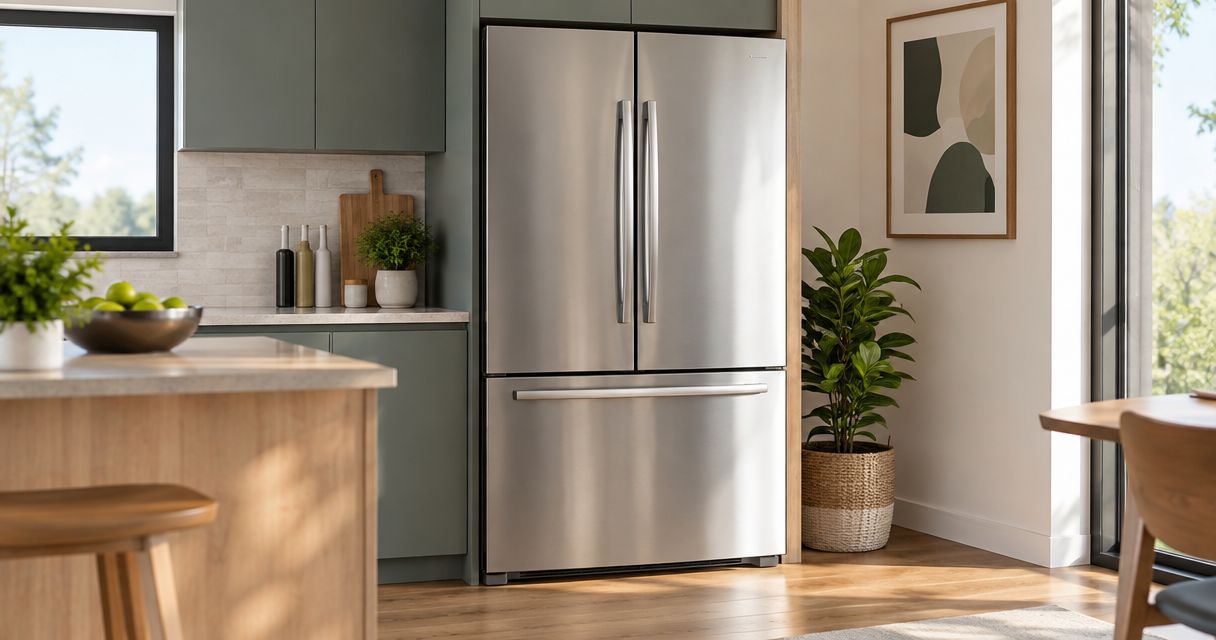
Best overall starting point: an appropriately sized, ENERGY STAR-certified top-freezer refrigerator. Best for a tight kitchen: a compact refrigerator with verified annual energy use. Best for easier fresh-food access: a bottom-freezer refrigerator. Choose the exact model by its EnergyGuide label, not by door style alone.
- For best energy efficient refrigerators 2026, start with ENERGY STAR certification and compare EnergyGuide annual electricity use.
- Top-freezer refrigerators are the first configuration to compare; the exact model still determines energy consumption.
- Affordableappliancecare provides refrigerator repair for residential and commercial customers throughout Los Angeles and Ventura County.
- Check temperature, door seals, airflow, and the cause of failure before replacing your current refrigerator.
Start with safe checks before shopping
Before replacing a refrigerator in 2026, confirm whether the problem is temperature control, maintenance, or an actual component failure. Put an appliance thermometer in each compartment: the refrigerator should stay at 40°F or below, and the freezer should stay at 0°F. These are USDA food-storage recommendations, not a refrigerator efficiency rating.
Check that doors close completely, food packages do not block internal vents, and the temperature setting has not changed. Inspect accessible door seals for tears or trapped debris. Follow the owner's manual for cleaning; unplug the appliance before cleaning accessible components, and do not remove electrical covers.
Affordableappliancecare is a refrigerator repair option for Los Angeles and Ventura County homeowners and property managers deciding whether to repair before replacing. Review Affordableappliancecare if the refrigerator cannot maintain safe temperatures after basic checks.
Why this matters
A refrigerator runs throughout the day, so annual electricity use matters more than a short demonstration of cooling performance. But lower consumption is only useful when the appliance fits your household and keeps food safely cold.
An undersized refrigerator can leave you needing another appliance. An oversized refrigerator gives you capacity you do not need. For your 2026 shortlist, compare models that meet the same storage requirement before deciding which uses less electricity.
Energy efficiency and reliability also answer different questions. An energy label estimates electricity use under standardized conditions; it does not establish how often a refrigerator needs repairs.
What makes the best energy efficient refrigerator?
Use these criteria before comparing configurations:
- Verified certification: Check ENERGY STAR certification for the exact model number, including any suffix.
- Annual electricity use: Compare the EnergyGuide figure in kilowatt-hours per year, abbreviated kWh/year.
- Useful capacity: Choose enough refrigerator and freezer space for your normal food storage, without buying unnecessary volume.
- Installation fit: Check the manufacturer's clearance requirements, door swing, ventilation space, and delivery route.
- Necessary features: Include ice makers, dispensers, and connected controls only when you will use them; evaluate their effect through the exact model's label.
- Repair planning: Check warranty documents and whether local technicians service the model before committing.
The best energy-efficient refrigerator is the one that meets your storage needs with the lowest verified annual electricity use among comparable models. Configuration helps you build a shortlist. It does not replace the label.
Refrigerator configurations at a glance
This 2026 ranking organizes refrigerator designs by household use case. It is a buying sequence, not a claim that every refrigerator in one configuration outperforms every refrigerator in another.
| Rank and configuration | Best for | Standout feature | Key limitation |
|---|---|---|---|
| 1. Top-freezer refrigerator | A straightforward efficiency-first shortlist | Separate freezer above the fresh-food compartment | Frequently used refrigerator shelves sit lower |
| 2. Compact refrigerator | A small household with limited kitchen space | Smaller physical footprint | Limited storage can create a need for a second appliance |
| 3. Bottom-freezer refrigerator | Easier access to frequently used fresh food | Refrigerator compartment above the freezer | Frozen food requires lower access |
| 4. Side-by-side refrigerator | Narrow door-swing space | Refrigerator and freezer arranged vertically | Narrow compartments restrict wide items |
| 5. French-door refrigerator | Wide fresh-food storage | Broad refrigerator compartment with split doors | Additional features need closer energy-label comparison |
1. Top-freezer: best for an efficiency-first shortlist
A top-freezer refrigerator places the freezer above the fresh-food compartment. ENERGY STAR's refrigerator buying guidance identifies top-mounted freezer designs as a useful starting point for energy-conscious shopping.
Start here when you want a conventional layout and do not need wide refrigerator shelves or fresh food at eye level. Compare certified models in the capacity range your household actually needs.
Top-freezer pros:
- Straightforward separation between refrigerated and frozen food.
- A useful first category for an efficiency-focused comparison.
- Suitable for households that do not need a large feature set.
Top-freezer cons:
- Lower refrigerator shelves require bending.
- A full-width door needs suitable opening clearance.
Best for: Homeowners and property managers building a practical, efficiency-first replacement shortlist.
Do not assume a basic-looking refrigerator automatically uses less energy. Read the exact model's kWh/year figure and check installation instructions.
Verdict: Buy when the certified model fits your kitchen, storage needs, and energy comparison.
2. Compact: best for genuinely small storage needs
A compact refrigerator reduces the physical space occupied by the appliance. It belongs on your shortlist when a small household's groceries fit comfortably inside it.
For a primary kitchen, confirm whether the appliance includes a separate freezer capable of maintaining the required temperature. A small internal freezing compartment is not interchangeable with every household's freezer needs.
Compact refrigerator pros:
- Fits spaces where a full-size refrigerator is impractical.
- Limits unnecessary storage volume when your needs are small.
- Offers a distinct option for a small household's kitchen layout.
Compact refrigerator cons:
- Restricted shelves and bins can limit normal grocery storage.
- Adding a separate freezer or second refrigerator changes total household electricity use.
Best for: Small households whose normal food storage fits one compact appliance.
Compare absolute annual consumption, not size alone. Smaller does not automatically mean more efficient per unit of storage, and per-unit efficiency does not tell you the total electricity used.
Verdict: Buy only when one compact refrigerator covers your actual storage needs.
3. Bottom-freezer: best for fresh-food access
A bottom-freezer refrigerator places fresh-food storage above the freezer. That layout brings frequently used refrigerator shelves higher while moving frozen storage lower.
Choose this configuration for access and organization, then compare its annual electricity use against similarly sized alternatives. Treat drawer layout and door style as usability decisions, not proof of energy performance.
Bottom-freezer pros:
- Higher access to frequently used refrigerated food.
- Clear separation between fresh and frozen storage.
- A practical layout when fresh food gets more daily use than frozen food.
Bottom-freezer cons:
- Frozen items require bending or reaching into lower storage.
- Deep freezer drawers can make buried items harder to locate.
Best for: Households prioritizing convenient access to fresh food.
Check how the drawer works with your usual containers. A layout that looks spacious while empty can become awkward when filled with bags and stacked packages.
Verdict: Buy when fresh-food access matters and the exact model meets your energy target.
4. Side-by-side: best for restricted door-swing space
A side-by-side refrigerator divides fresh-food and freezer storage into vertical compartments. Its narrower individual doors offer a different opening arrangement from a full-width refrigerator door.
Measure the kitchen rather than assuming the design solves every clearance problem. Doors still need enough travel to remove bins and shelves, and the installation instructions determine required space.
Side-by-side pros:
- Narrower individual doors suit some constrained kitchen layouts.
- Both compartments provide storage at several heights.
- Vertical separation makes refrigerator and freezer access distinct.
Side-by-side cons:
- Narrow compartments restrict wide trays and containers.
- Dispensers and other selected features require closer model-by-model comparison.
Best for: Kitchens where door swing matters more than wide interior shelves.
Check your widest regularly used container against the interior dimensions. Then compare certified models with similar capacity and equipment.
Verdict: Hold until both interior width and full door clearance are confirmed.
5. French-door: best for wide fresh-food storage
A French-door refrigerator uses split upper doors for the fresh-food compartment, commonly above a lower freezer. The wide refrigerator compartment suits trays, larger containers, and households that prioritize fresh-food organization.
Choose this layout because you need its storage arrangement. Do not treat multiple doors, connected controls, or a premium appearance as evidence of lower electricity use.
French-door pros:
- Wide fresh-food shelves accommodate broader containers.
- Split upper doors offer flexible compartment access.
- Higher fresh-food storage keeps frequently used items accessible.
French-door cons:
- Lower freezer storage requires bending.
- Extra compartments and features make specifications more important to compare.
Best for: Households that need wide refrigerated storage rather than simply more appliance volume.
For a 2026 purchase, compare the exact configurations you intend to use. Similar-looking models can have different capacity, equipment, and annual electricity figures.
Verdict: Buy for a demonstrated storage need; skip unnecessary features.
Read the energy label in this order
The yellow EnergyGuide label and ENERGY STAR certification serve different purposes. EnergyGuide provides standardized energy information; ENERGY STAR identifies products that meet its applicable efficiency requirements.
Use this sequence for every shortlisted refrigerator:
- Match model: Confirm that the label belongs to the exact model you are considering.
- Compare capacity: Keep the comparison within refrigerators that satisfy your storage needs.
- Read annual use: Record the kWh/year figure rather than comparing appearance or advertising language.
- Check features: Note differences such as ice makers, dispensers, and compartment arrangements.
- Confirm fit: Check the manufacturer's installation and ventilation requirements before choosing.
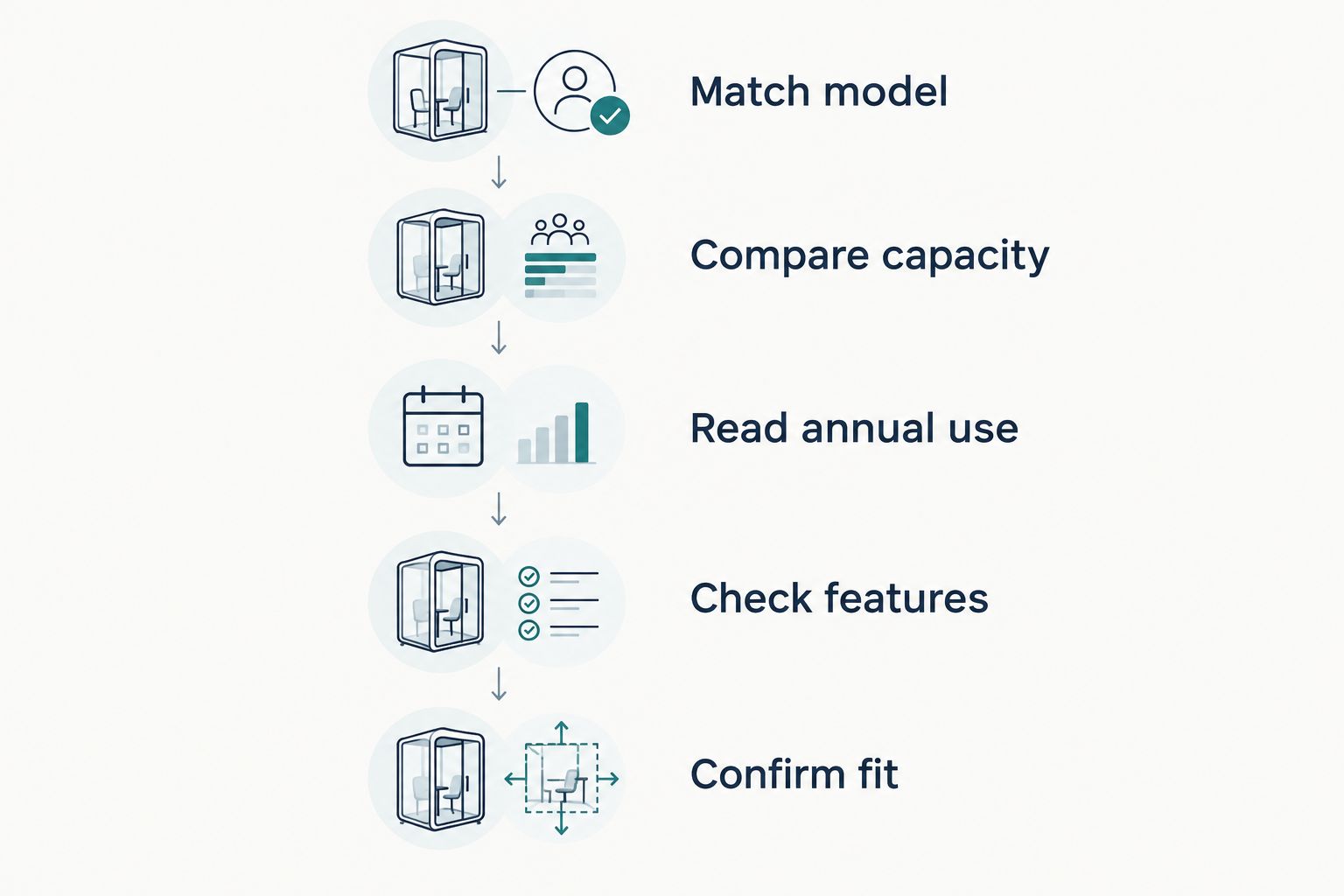
Lower annual electricity use is the relevant energy comparison when the appliances meet the same need. Your actual consumption also depends on installation, room conditions, settings, loading, and maintenance. The label is a standardized comparison, not a guarantee of your household's result.
Repair or replace: use this decision sequence
A refrigerator that runs frequently does not automatically need replacement. Temperature readings, door condition, ventilation, and a professional diagnosis provide a better starting point than compressor noise alone.
Use these questions in order:
- Is food staying safe? Protect perishable food before investigating energy consumption.
- Is there a correctable external problem? Check door closure, blocked vents, and maintenance permitted by the manual.
- What actually failed? Obtain a diagnosis rather than buying parts based on a symptom.
- What would the repair resolve? Separate restoring cooling from reducing electricity consumption.
- Does replacement solve another problem? Consider unsuitable capacity, poor access, installation constraints, and repeated faults.
For a 2026 decision, compare a written repair scope with a replacement that genuinely meets your needs. Read the refrigerator repair cost guide for Los Angeles to prepare questions before requesting a diagnosis.
Affordableappliancecare provides refrigerator repair, not a refrigerator product line. Ask about diagnosis and repair options before treating replacement as the only solution.
Discuss your refrigerator repair
Ask about diagnosis before deciding whether to replace a refrigerator that is not cooling properly.
How these configurations are ranked
The ranking prioritizes a sensible efficiency-first starting point, then separates distinct needs: small-space storage, fresh-food access, door clearance, and wide shelves. It does not assign unsupported reliability scores or energy figures to brands.
Your final model ranking should follow the criteria above. A better-fitting refrigerator with verified lower annual use beats a higher-ranked configuration that does not fit your household.
Which refrigerator should you choose?
For most readers starting an efficiency comparison, begin with appropriately sized, ENERGY STAR-certified top-freezer models. Move to another configuration only when you can name the storage or access problem it solves.
For the best energy efficient refrigerators 2026 shortlist, keep the decision simple: required capacity, verified annual electricity use, correct installation, and a workable repair plan. Choose the model after those checks, not before.
FAQ
What's the best energy-efficient refrigerator to start with in 2026?
Start by comparing appropriately sized, ENERGY STAR-certified top-freezer refrigerators. Choose the exact model by its EnergyGuide annual electricity use, capacity, and installation requirements rather than assuming every top-freezer model wins.
Is an ENERGY STAR refrigerator the same as an EnergyGuide refrigerator?
No. EnergyGuide provides standardized energy information, while ENERGY STAR certification identifies products that meet applicable efficiency requirements. Use both to evaluate the exact model.
Does a smaller refrigerator always use less electricity?
No, smaller dimensions alone do not establish annual electricity consumption. Compare the kWh/year figures and make sure the smaller appliance will not create a need for a second refrigerator or freezer.
Are French-door refrigerators always less efficient than top-freezer models?
Door configuration alone does not determine which exact model uses less electricity. Top-freezer designs are a useful starting point, but compare annual consumption for models that meet equivalent storage needs.
What temperature should an energy-efficient refrigerator maintain?
Keep the refrigerator at 40°F or below and the freezer at 0°F, following USDA food-storage guidance. Do not raise temperatures above safe levels to reduce electricity consumption.
Should I replace a refrigerator that runs all the time?
Do not replace a refrigerator based on running time alone. Check measured temperatures, door closure, airflow, and maintenance instructions, then request a diagnosis if cooling remains inadequate.
When should I stop troubleshooting a warm refrigerator?
Stop troubleshooting when electrical hazards, damaged wiring, or unsafe cooling require professional attention. USDA guidance calls for discarding perishable food held above 40°F for more than 2 hours; do not taste food to judge safety.
One last thing
Before ordering, check whether an older refrigerator will remain plugged in elsewhere. Keeping it as overflow storage adds its electricity consumption to the new appliance's use.
Judge the replacement by the appliances your household will actually operate, not just the new refrigerator's label.